Ant Pest Control: How to Get Rid of Ants Around the House
Your go-to source for expert tips, seasonal advice, and the latest news in home protection.
Ants are one of the most common pests homeowners deal with, and they can be surprisingly persistent. You may see a few near the kitchen sink, trailing along the baseboards, coming in after rain or showing up around patios, mulch, sidewalks, and foundations.
The problem is that most ant activity is a symptom, not the issue itself. The ants you see are just scouts and workers; the colony behind them is what keeps sending more. That's why sprays that only take effect on contact rarely solve anything for long.
Pestify's Pro Protection Plan takes a different approach: pro-grade pest control built to treat your home's exterior like a professional would, so you're addressing the colony, not just the ants in front of you. Build your plan and get started.
Build Your Plan
Why Do Ants Keep Coming Back to Your House?
Ants are social insects, and the ones you see are usually worker ants searching for food, water, and shelter. As they travel, they leave behind pheromone trails that guide the rest of the colony to the same location. Common reasons ants are attracted to homes include:
- Moisture around the foundation
- Mulch, landscape rock or wood piles near the home
- Cracks and gaps around doors, windows, pipes, and siding
- Food crumbs, pet food, sticky spills, and garbage
- Tree branches or plants touching the home
- Rain, heat, and seasonal changes that drive ants indoors
The ants you see are only a small portion of the colony. Getting rid of the visible ants won't stop more from coming. As long as the colony remains active, it will continue sending new worker ants into your home.
Hardware Store DIY vs. Professional-Grade Ant Pest Control
Not all DIY pest control is the same. Most ant sprays purchased online, or at the hardware or grocery store, are made for quick contact extermination. They may knock down visible ants, but they often do not provide the kind of long-lasting exterior protection your home needs. Some products can even scatter ants and make the problem feel worse.
The difference comes down to the formula and the approach. Retail sprays are diluted for broad, general use and break down quickly once applied. Pestify’s Pro Protection Plan uses active formulas built for the same kind of residual exterior barrier a licensed technician would use, so protection holds up against rain, heat, and time instead of fading after a few days.
Pair that with
how Pestify works, where and how you apply it matters as much as what you apply, and you get a level of control that off-the-shelf products simply are not designed to deliver.
How Pestify Helps Protect Your Home From Ants and Other Pests
Pestify's Pro-Grade Solution creates a Residual Exterior Barrier around your home to help eliminate ants and other common household pests while protecting against new pest activity. Apply it around:
- Foundation
- Doors and entry points
- Garage perimeter
- Windows
- Patios and porches
- Cracks, crevices, and other common entry points
If ants are already active inside your home, apply the Pro-Grade Solution to cracks, crevices, windowsills, and entry points, then place ant bait where you've noticed activity. For effective ant pest control, this combination of barrier treatment and targeted bait is key. If most of the activity is centered in the kitchen, check out our guide on
how to get rid of ants in the kitchen permanently for room-specific steps.
When to Add Ant Bait
If you are already seeing active ants, ant bait can add an extra layer of control. Baits work differently than sprays. Instead of just ridding the ants you can see, bait acts as a food source. Worker ants pick it up and carry it back to the colony, helping control the ants at the source.
This is especially helpful when ants are actively trailing indoors, showing up in kitchens or bathrooms, or returning even after cleaning and spraying. Our Pro-Grade Solution helps protect the perimeter. Ant bait helps address existing activity. Together, they give you a stronger, more complete DIY ant control plan. Think of the Pro-Grade Solution as your home's front line, and the bait as backup for any activity already inside.
Common Types of Ants Around Homes
Every effective ant pest control approach starts with knowing which species you're dealing with. Here are the ants most frequently found in and around US homes:
Odorous House Ants
Odorous house ants are one of the most common ants found inside homes. They are small, dark brown to grayish brown, and give off a strong unpleasant smell when crushed. They often show up around kitchens, sinks, wall voids, and after rain. Odorous house ants frequently refuse traditional retail baits, so a bi-monthly or quarterly Residual Exterior Barrier application is necessary to truly reduce and eliminate their populations.
Pavement Ants
Pavement ants are small, dark brown to blackish-brown ants, typically around 1/8 inch long, commonly found near sidewalks, driveways, garage floors, patios, and concrete slabs. They nest under concrete and along foundations, and you may notice small piles of dirt near cracks, expansion joints, or baseboards where they are entering. Because pavement ants often have multiple colonies nearby, activity can reappear in a new spot even after one nest is treated.
Argentine Ants
Argentine ants are small and light-to-dark brown, and they can form very large colonies with multiple queens that readily split off to create new colonies nearby. They often nest in moist soil, mulch, wood piles, and around foundations, especially on shadier, damper sides of the home. These ants are especially persistent and highly food-motivated, which is why regular perimeter treatment matters more than spot-treating visible trails.
Pharaoh Ants
Pharaoh ants are tiny, yellowish ants that are notoriously difficult to control. These colonies should never be aggressively treated with standard contact sprays. Aggressive treatment threatens the colony, causing it to split, or "bud," and spread into adjacent rooms along plumbing lines and electrical wires, turning a small problem into a widespread one. Pharaoh ants should only be treated using an undetectable, long-residual bait that the colony carries back to the nest over time.
Fire Ants
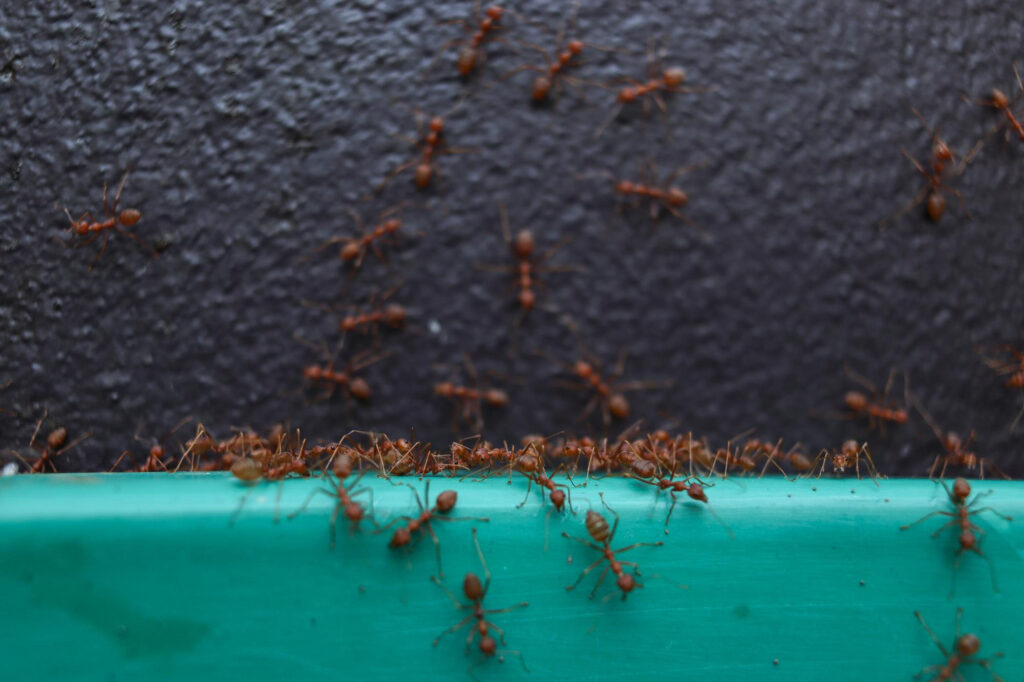
Fire ants are reddish-brown and known for painful stings that can cause welts and white pustules. They often build visible mounds in soil and can become aggressive when disturbed. Over-the-counter store products frequently fail against fire ants because they simply push the colony around the yard rather than eliminating the mound at its source. Use caution around fire ant activity, especially if children, pets, or anyone with sting allergies may be nearby.
Carpenter Ants
Carpenter ants are a nationwide threat and one of the more destructive ants homeowners encounter. They are relatively large, ranging from 1/4 inch to almost 1/2 inch long, and primarily black. Rather than eating wood, they use specialized jaws to cut into moist or rotting wood to build their nests, which can threaten structural supports, framing, decks, and crawl spaces over time.
To help prevent carpenter ant activity: Store firewood away from the house, clear branches or wires touching the roof, and maintain adequate ventilation in crawl spaces and attics.
Crazy Ants
Crazy ants are a common threat across the Southern and Gulf Coast states. They have slender, dark-brown to black bodies with long antennae and are easy to identify by their distinctly erratic, non-linear movement. Crazy ants run rapidly along foundation walls and pavements and are highly attracted to kitchen scraps, garbage, and house fly larvae. Like odorous house ants, crazy ants often reject traditional retail baits, and a consistent, long-residual perimeter barrier is essential to reducing their numbers. Knowing how to get rid of ants like these means committing to ongoing perimeter protection instead of a single treatment.
Acrobat Ants
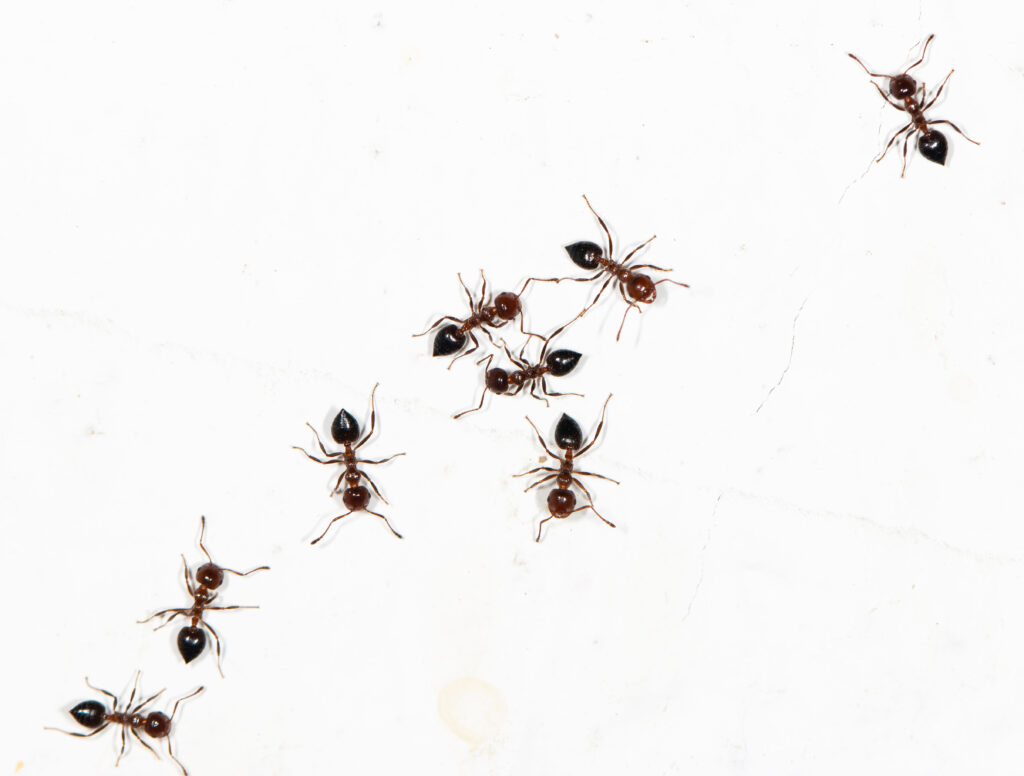
Acrobat ants are common along the East Coast and throughout the Southern US. They are shiny, brown-to-black ants, about 1/8 inch long, with a distinctly heart-shaped abdomen visible from above. Their signature behavior gives them their name: When excited or disturbed, acrobat ants point their abdomens up or over their heads. They tend to nest in moist areas like soffits, door frames, and rotted wood.
What You Can Do Before Treating
Pestify pest control works better when the area around your home is cleaned up and maintained. Before applying your Pestify treatment, we recommend:
- Move mulch 6-10 inches away from the foundation when possible
- Clean food crumbs, sticky spills, and pet food areas
- Keep garbage sealed
- Reduce standing moisture near the foundation
- Move firewood, bricks, and stored items away from the home
These steps help reduce what ants are looking for: food, water, shelter, and easy entry points.
How Pestify Will Help You Get Rid of Your Ants Along With All Your General Pests
1. Start with Pestify's Pro-Grade Solution
Apply the perimeter treatment as directed in your step-by-step guide to create a protective barrier around your home.
2. Add Ant Bait if Ants Are Already Active
If you are seeing ants trailing, returning, or showing up inside, add ant bait for source-level control.
3. Keep the Barrier Maintained
Pests are seasonal, and exterior pressure changes throughout the year. Staying on schedule helps keep protection consistent.
Ready to Get Rid of Ants?
Ants are a year-round issue, not a one-time spray. The most effective approach combines a maintained exterior barrier with targeted bait for any activity already inside and staying ahead of the next wave before it starts.
That's exactly what the Pro Protection Plan is built for. Get a
custom Ant Pest Control Plan tailored to your home's layout and pest pressure, or check out our comprehensive pest guide for more seasonal tips and species-specific advice.
Get A Custom Ant Pest Control Plan




 Ants9 types
 Spiders12 types
 Roaches5 types
 Crickets4 types
 Beetles6 types
 Overwintering Pests5 types
 Millipedes2 types
 Silverfish & Firebrats2 types
 Centipedes
 Earwigs
 Scorpions
 Sowbugs & Pillbugs
 Clover Mites
 Springtails
 MiceBait station add-on